INSURANCE
Arizona doesn't have a state-backed safety net for wildfire-exposed homes. That makes what you do to your own property matter even more.
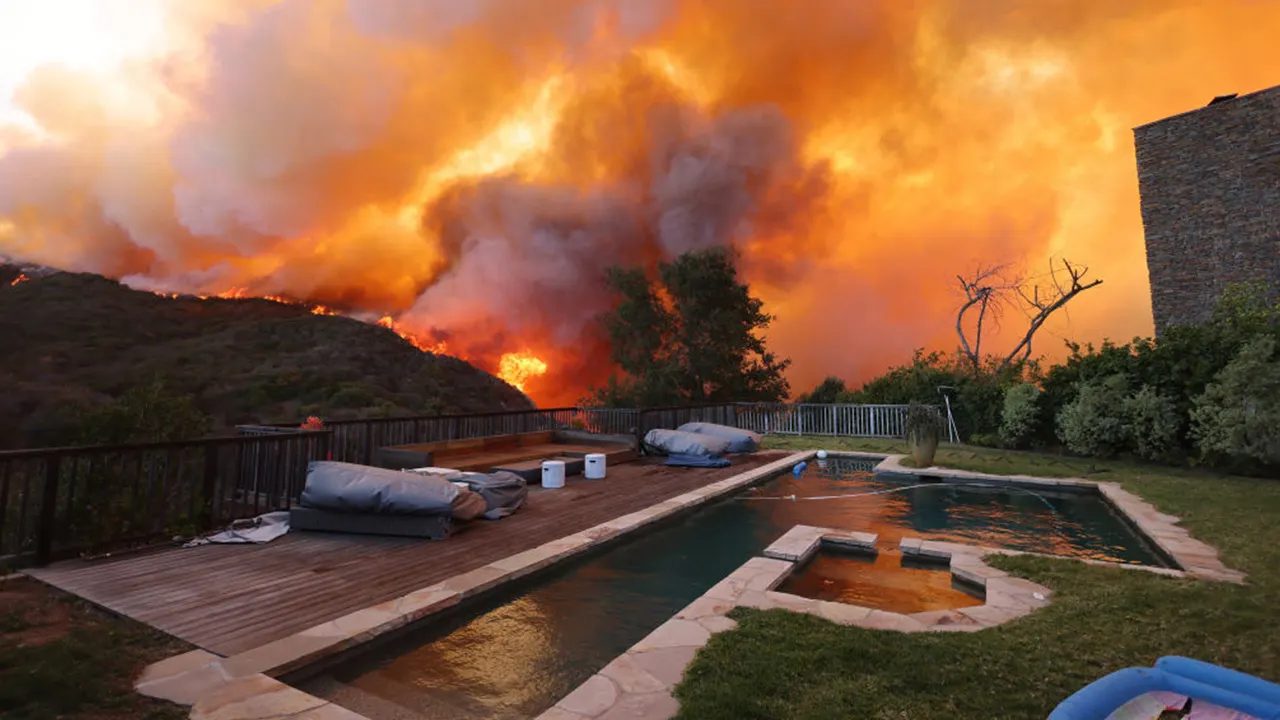
Wildfire risk doesn't just threaten your home — it's reshaping what it costs to insure it, and in some cases, whether you can get insured at all. The clearest example is California, but the ripple effects reach Arizona too, and Arizona homeowners are in a more exposed position than most people realize.
California's wildfire insurance market has been under severe strain. Homeowner premiums rose roughly 84% between the end of 2020 and March 2026. Enrollment in the California FAIR Plan — the state's insurer of last resort — has nearly tripled, growing from under 2% to about 5% of insured homes statewide, with roughly 642,010 households pushed onto it. The FAIR Plan itself received a 29.1% average rate increase effective October 15, 2026, with wildfire-exposed premiums in some areas potentially doubling. Seven of the twelve largest insurers in California have reduced or halted new homeowner underwriting in wildfire-prone areas, and in 46 of California's 58 counties, insurers issued more nonrenewals than new policies.
That's not a distant problem. It's a preview of what happens to an insurance market when wildfire losses outpace what insurers priced for.
Here's the part Arizona homeowners need to understand clearly: unlike California and Florida, Arizona does not have a state FAIR Plan. If a standard insurer declines to cover a property because of wildfire exposure, there's no state-backed fallback option waiting to catch that homeowner. Instead, coverage often falls to surplus-lines and specialty carriers, which typically charge 20% to 50% more than standard admitted insurers and often come with less favorable terms — higher deductibles, more exclusions, and less predictable renewal terms.
Arizona homeowners have already felt the pressure: premiums statewide rose roughly 48% over the past three years, adding about $700 a year to the average homeowner's bill. Without a FAIR Plan, that trend has fewer guardrails than it does in states with a state-backed insurer of last resort.
Insurance underwriting for wildfire risk increasingly looks at defensible space, vegetation density, roofing material, and distance to open wildland — the same factors that determine how a fire actually behaves on a property. Homes with cleared defensible space and reduced fuel loads are generally viewed as lower risk than homes with dense, untouched vegetation right up to the structure. While we're not insurance agents and can't speak to any specific policy or carrier's underwriting criteria, reducing fuel load and maintaining defensible space is a documented, common-sense step that works in your favor regardless of which insurer you're with.
That's part of why we built our Wildfire Defense Certificate — a way to document that a property has completed a full Property Reset and applied defensible space principles. It doesn't guarantee an insurance outcome, but it gives homeowners a concrete record to bring to their insurer or a potential buyer.
The takeaway: Arizona has no FAIR Plan. If your property is hard to insure because of wildfire exposure, reducing that exposure yourself — through defensible space and fuel reduction — is one of the few levers you actually control.
Not sure where your property stands? A Wildfire Risk Report is the place to start.
Sources: California Department of Insurance, California FAIR Plan Association public rate filings, Insurance Information Institute (III), state insurance market reporting. This post is for general information only and is not insurance or financial advice — talk to a licensed insurance professional about your specific policy and coverage options.
You can't set insurance rates. You can reduce the fuel load that puts your home at risk.
Call (928) 227-8626 | Email admin@southwestsawyers.net