WILDFIRE EVENTS
Wildfire isn't just a forest problem in Arizona. It's a desert problem too — and it's getting closer to home.
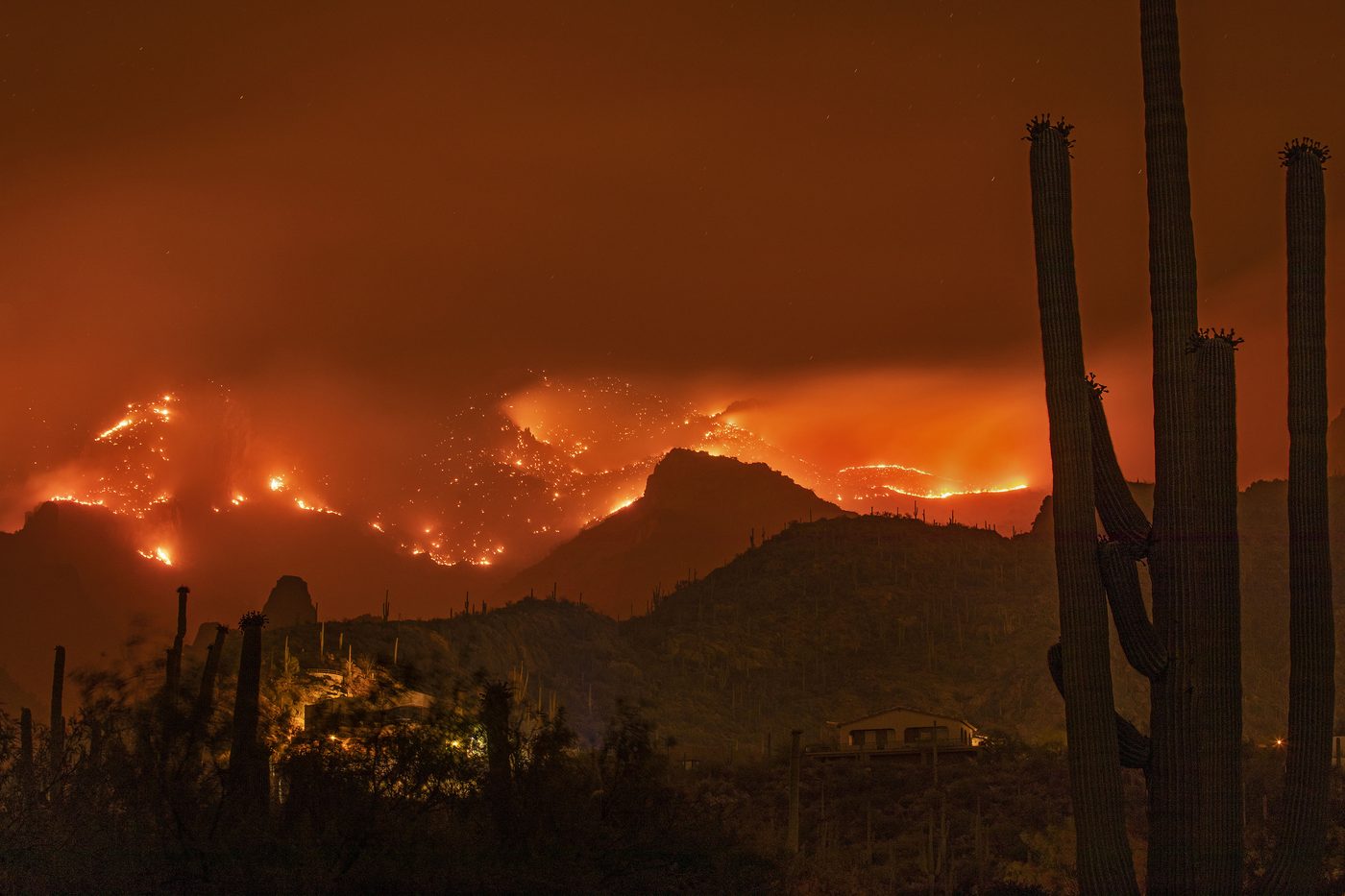
Say "Arizona wildfire" and most people picture the Mogollon Rim or the pine forests up north. But some of the state's most damaging fires have burned through desert scrub, chaparral, and the foothill communities where a lot of our clients live — places like Cave Creek, Carefree, Fountain Hills, Scottsdale, Gold Canyon, and Superior. Desert vegetation burns fast, wind pushes it hard, and homes built right up against that terrain are exposed in ways people don't always expect.
Arizona's largest fire on record is the Wallow Fire (2011), which burned 538,049 acres in the White Mountains — the biggest wildfire in state history. Arizona's third-largest fire, the Cave Creek Complex (2005), burned 243,950 acres of desert and foothill terrain in the exact region we serve today, showing that catastrophic acreage isn't limited to high-elevation forest.
Closer to our Superior and Gold Canyon service areas, the Woodbury Fire (2019) tore through 123,875 acres of the Superstition Wilderness, making it the fifth-largest fire in Arizona history and a direct reminder that the Superstition range is far from immune.
Big acreage numbers matter, but the fires that really change how homeowners think about risk are the smaller ones that hit close to structures. The Ocotillo Fire near Cave Creek burned only about 980 acres — small by Arizona standards — but destroyed 20 buildings, including 8 homes. A roughly 100-acre brush fire in Scottsdale forced evacuations in a matter of hours. And the Gate Fire, which broke out near 128th Street and Ranch Gate Road in the Fountain Hills area, is the kind of ignition point that can start on a roadside and reach a subdivision faster than most residents expect.
These smaller fires are the ones that matter most for defensible space planning. A property doesn't need to be near a 500,000-acre fire to be at risk — it needs to be near dry fuel and wind, and in the desert Southwest, that's most of the year.
Arizona's fire season has traditionally run from April through July, before monsoon moisture arrives. That window is no longer the whole story. According to state fire data, 2025 brought roughly 1,608 fires and 331,629 acres burned across Arizona. Fire activity has continued into early spring in subsequent years, with fire managers and state agencies increasingly treating wildfire as a year-round risk rather than a four-month event, driven by prolonged drought and lower fuel moisture.
For homeowners in Scottsdale, Fountain Hills, Mesa, Carefree, Cave Creek, Gold Canyon, Apache Junction, Globe, and Superior, that shift means defensible space isn't a spring chore — it's ongoing maintenance.
Desert and chaparral fuels — dry brush, dead vegetation, overgrown landscaping — carry fire fast and throw embers far ahead of the flame front. That's exactly the fuel type our fire mitigation and defensible space services are built to address, and it's why we start every project with a Wildfire Risk Report that looks at your specific lot, not a generic checklist.
The takeaway: Arizona's biggest wildfire risk isn't confined to the forests up north. Desert and foothill communities have already seen some of the state's most destructive fires — and the season that used to protect us for eight months a year is shrinking.
Sources: Arizona Department of Forestry and Fire Management, National Interagency Fire Center. Fire size and structure-loss figures reflect the most recent publicly reported data at time of writing and may be updated as new information becomes available.
Get a professional Wildfire Risk Report and know exactly where your property stands.
Call (928) 227-8626 | Email admin@southwestsawyers.net