HOME LOSS STORIES
These aren't abstract statistics. They're neighborhoods that looked just like ours — until one afternoon changed everything.
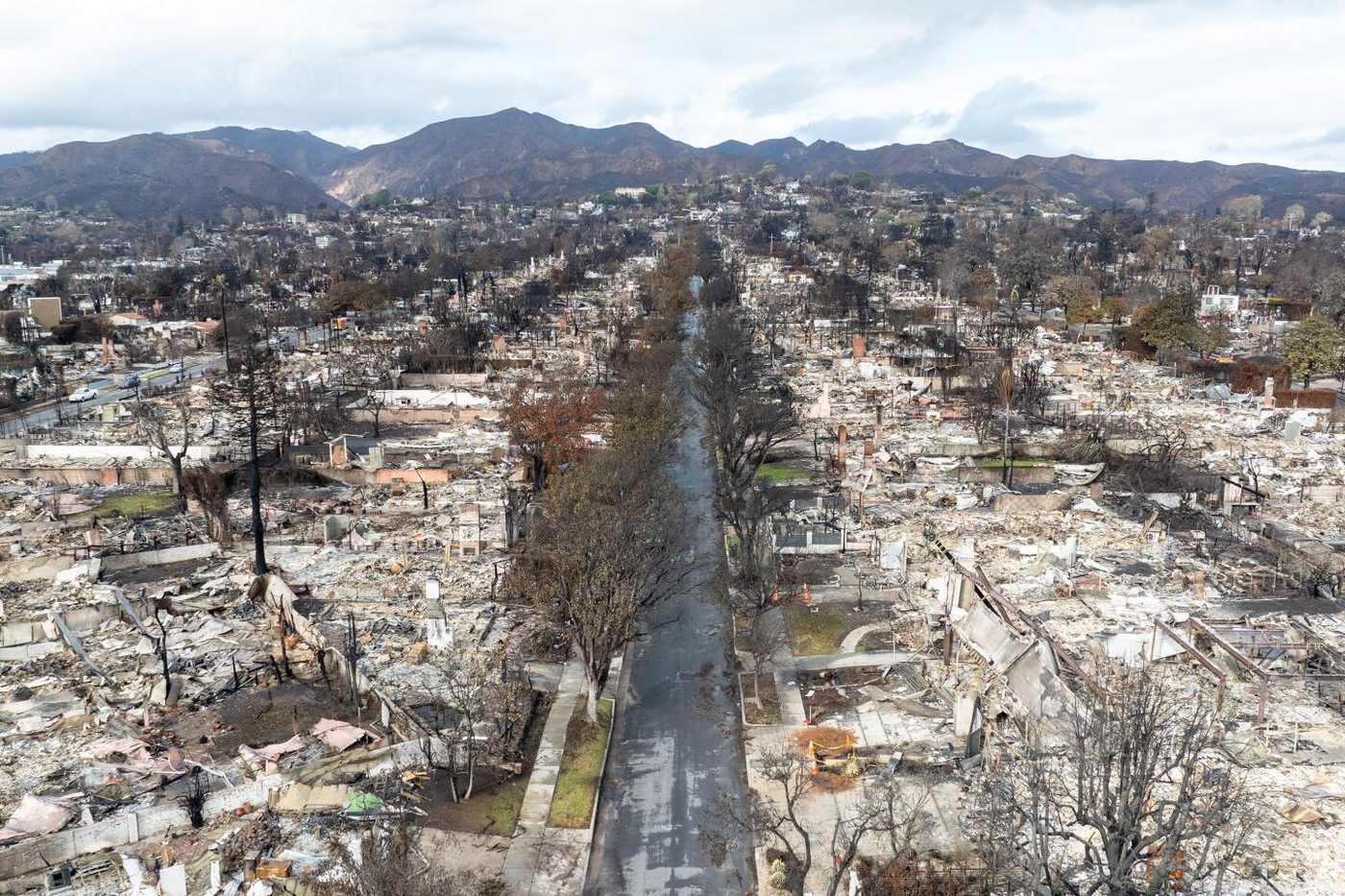
It's easy to think of catastrophic wildfire as something that happens somewhere else, to someone else's neighborhood. The Palisades and Eaton fires proved how fast that assumption can fall apart.
On January 7, 2025, two separate wildfires broke out in the Los Angeles area within hours of each other. The Palisades Fire burned 23,707 acres and destroyed 6,833 structures. The Eaton Fire burned 14,021 acres and destroyed 9,413 structures. Combined, the two fires scorched roughly 59 square miles and destroyed 16,246 structures — the vast majority of them homes. Reported death tolls from the two fires have ranged from 27 to 31 across different official counts, underscoring how difficult these events are to fully tally even months later.
These weren't remote wildland fires. They burned directly through dense residential neighborhoods — the kind of built environment that a lot of people assumed was "safe" from wildfire simply because it wasn't surrounded by forest.
One year after the fires, roughly 70% of displaced residents in the affected areas had still not returned home, many of them caught in extended disputes with insurers over coverage, valuation, and rebuild costs. Losing a structure is only the first chapter. The years-long process of rebuilding, fighting for a fair insurance settlement, and finding stable housing in the meantime is often the harder story — and it's one that rarely makes headlines after the smoke clears.
The Palisades and Eaton fires happened in dense, established neighborhoods with mature landscaping, plenty of vegetation close to structures, and homes built before modern wildfire-resistant codes were common. That description fits a lot of the Arizona communities we work in — Scottsdale, Fountain Hills, Cave Creek, Carefree, and the foothill neighborhoods around Gold Canyon and Apache Junction all share that same mix of desert vegetation and homes built close together or close to open land.
The lesson from these fires isn't "this only happens in California." It's that dense vegetation next to structures, combined with dry conditions and wind, can turn a wildland fire into a structure fire in a matter of minutes — regardless of state lines.
The takeaway: Over 16,000 homes and structures were lost in a single day in January 2025. Defensible space and fuel reduction are the difference between a fire that passes through and a fire that takes the house with it.
If you want to understand what actually reduces this kind of risk on your own property, read our post on why fire mitigation and defensible space work, or start with a Wildfire Risk Report to see where your property stands today.
Sources: California Department of Forestry and Fire Protection (CAL FIRE) incident reports, widely reported news coverage of the January 2025 Los Angeles wildfires. Death toll and displacement figures vary by source and reporting date; figures here reflect ranges reported as of this writing.
A Wildfire Risk Report shows you exactly what's putting your property at risk — before fire season does.
Call (928) 227-8626 | Email admin@southwestsawyers.net